
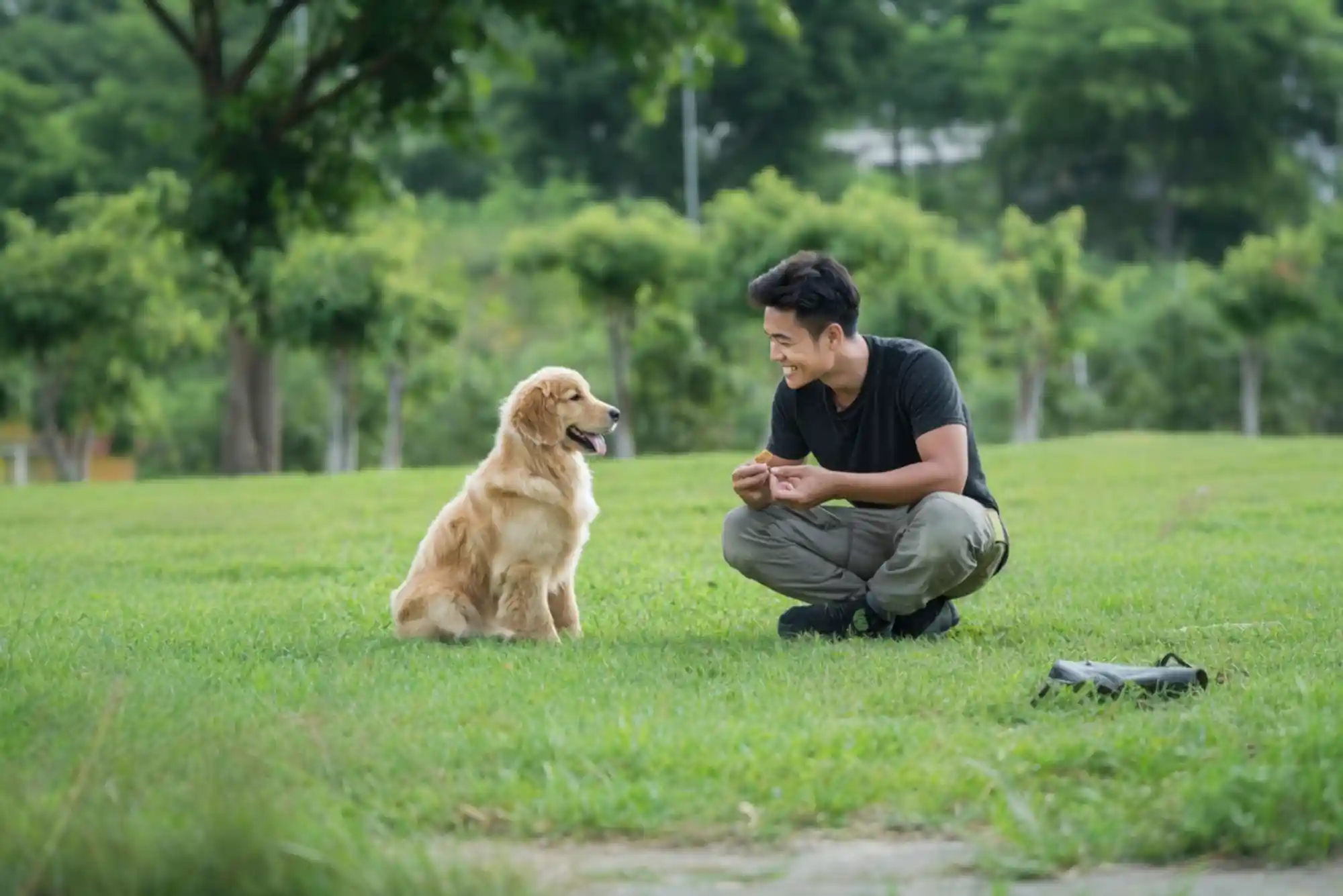
Introduction
Teaching a dog an emergency recall command is one of the most valuable things you can do for their safety. A dog that immediately turns and runs toward you when called can avoid traffic, dangerous animals, unsafe situations, or getting lost.
The challenge is that reliable recall does not happen simply because a dog knows the word “come.” Dogs are naturally interested in smells, people, wildlife, other animals, toys, and everything happening around them. Asking them to abandon those distractions and run straight back to you requires strong training and an excellent reason to respond.
A good emergency recall command is therefore built through positive associations, gradual practice, valuable rewards, and repetition. The goal is not to make your dog afraid of ignoring you. It is to make returning to you the most rewarding choice they can make.
What Is an Emergency Recall Command?
An emergency recall command is a special cue that tells your dog to return to you immediately, particularly when their safety may be at risk.
You might use it if your dog slips through an open gate, gets loose from a leash, starts heading toward a road, notices dangerous wildlife, or moves toward another potentially hazardous situation.
This is different from an everyday recall. You might casually call your dog to come inside for dinner, but an emergency recall needs to have much stronger reliability and a powerful positive association.


A useful emergency cue can be a word such as “here,” “now,” or another short phrase your dog does not hear frequently. Some owners use a whistle or another distinctive sound. The important thing is consistency: everyone who handles the dog should know exactly what the cue means.
A reliable recall is considered one of the most important obedience skills because it can potentially prevent a dangerous situation from becoming an accident.
Why Every Dog Needs an Emergency Recall
Dogs can make surprisingly fast decisions when something catches their attention. A squirrel crossing the street, a loud noise, another dog, or an unfamiliar person can be enough to make a normally obedient dog move away from you.
A leash provides physical control, but there are moments when a leash can break, a collar can slip, or a door can accidentally remain open. An emergency recall gives you another layer of protection.
It is also important for situations that do not look dangerous at first. Your dog may chase something and suddenly find themselves farther away than expected. If they have been trained to immediately return to your voice, you have a much better chance of interrupting that behavior.
However, no recall should be treated as a guarantee. Even a highly trained dog can make mistakes, particularly around extremely exciting distractions. Safe fencing, appropriate leashing, supervision, and compliance with local leash laws remain essential.
Choose a Special Recall Word
If you regularly use “come” for everyday situations, consider choosing a completely different cue for your emergency recall command.
The reason is simple. You want the emergency cue to feel special.
Suppose you call “come” twenty times every day when your dog is wandering around the house. Eventually, the word may become background noise. Worse, if you repeatedly say “come” while your dog ignores you, the cue can lose its meaning.
A fresh word gives you an opportunity to build a strong association from the beginning.
Choose something short and easy to say clearly. Avoid words that sound similar to common household commands. Once you have selected your cue, use it consistently.
Do not casually test it throughout the day. The emergency cue should be reserved for structured training and genuine emergencies once your dog understands it.
Build the Association Before Expecting a Recall
Before asking your dog to run across a yard or away from an exciting distraction, teach them that the emergency cue predicts something fantastic.
Start in a quiet room where your dog is relaxed. Say the chosen cue in an enthusiastic voice and immediately provide a high-value reward.
At this stage, you are not testing whether your dog will run toward you. You are teaching the meaning of the sound.
Repeat this over several short sessions. Your dog should begin to hear the cue and immediately become excited because they expect something wonderful.
The reward should be significantly more appealing than an ordinary piece of kibble. Small pieces of cooked chicken, a favorite treat, freeze-dried meat, or another food your dog loves can work well. Some dogs are more motivated by toys or enthusiastic play.
Positive reinforcement is particularly useful for recall because you want your dog to associate returning to you with something enjoyable.
Teach Your Dog to Run Toward You
Once your dog understands that the emergency cue predicts a reward, start creating movement.
Stand only a few feet away. Get your dog’s attention and give the cue once. As soon as your dog turns toward you, encourage them with an upbeat voice and movement.
You can move backward or crouch down to make approaching you more exciting.
When your dog reaches you, reward immediately and generously.
Do not wait several seconds before rewarding. Your dog needs to understand exactly which behavior earned the reward: hearing the cue, turning toward you, and coming all the way to you.
Make the experience feel like a celebration rather than an obedience test.
This approach is consistent with modern recall training recommendations that emphasize making the handler more rewarding and interesting than competing distractions.
Practice the Collar Grab
Getting your dog to reach you is only part of an emergency recall command. You may also need to safely take hold of them.
Some dogs happily run toward their owners but move away as soon as a hand reaches for their collar. That can become a serious problem if you need to secure them quickly.
Teach your dog that being gently grabbed by the collar predicts another reward.
Start slowly. Touch the collar, reward, and release. Then progress to holding the collar briefly before rewarding. Gradually make the movement more natural and confident.
Your dog should learn that coming close and allowing you to secure them is not something to fear.
AKC recall guidance specifically recommends teaching a positive association with collar grabs because returning to the owner is much more useful when the dog can then be safely restrained.
Increase Distance Gradually
When your dog consistently responds indoors, begin increasing the distance.
Call from across a room. Then try from another room. Next, practice in a secure yard or another controlled environment.
Do not make the mistake of jumping immediately from a quiet living room to a busy park. Your dog may understand the cue perfectly in a calm environment but struggle when surrounded by exciting smells, people, animals, and movement.
Recall training works best when difficulty increases gradually.
A long training line can be useful outdoors because it gives your dog freedom to move while allowing you to maintain physical control. It should not be used to drag your dog toward you. Instead, it provides a safety net while you practice.
Add Distractions One at a Time
Distraction training is where an emergency recall command becomes genuinely useful.
Start with mild distractions. Your dog might be sniffing the grass, looking at a toy, or watching someone walk at a distance.
Give the recall cue once.
If your dog immediately turns and runs toward you, reward generously.
If they ignore you, the training is too difficult at that moment. Reduce the distance, lower the distraction, or return to an easier environment.
Avoid repeatedly shouting the cue. Saying “come, come, come, COME!” teaches your dog that the first command is optional.
A reliable recall should be built through successful repetitions rather than constant corrections.
As your dog improves, gradually introduce more challenging distractions. You can eventually practice around greater distances, movement, toys, other people, and controlled exposure to other dogs.
Make Coming Back More Rewarding Than Running Away
Your dog is constantly making choices.
If chasing a squirrel is more exciting than returning to you, your recall will struggle. Your job is to make returning incredibly worthwhile.
This does not mean you need to give enormous treats forever. During the learning phase, however, it is perfectly reasonable to use your dog’s favorite rewards.
You can also use games.
Run backward when your dog turns toward you. Celebrate when they arrive. Throw a toy. Play tug. Give several small treats in succession.
The more positive experiences your dog has with returning to you, the stronger the behavior becomes.
Another useful strategy is to occasionally call your dog during enjoyable activities and then release them back to what they were doing. If every recall means “fun is over,” your dog may eventually avoid coming.
Instead, call them, reward them, and sometimes say, in effect, “Good job—go play again.”
This prevents recall from becoming associated exclusively with the end of freedom.
Use Recall Games to Build Speed
Training does not need to feel repetitive.
A simple hide-and-seek game can encourage your dog to search for you. Have someone hold your dog while you move a short distance away. Give the recall cue, then celebrate when your dog reaches you.
Another option is a family recall game. Two people can stand several feet apart and take turns calling the dog. Each successful arrival receives a reward.
You can also play a chase game by moving backward while your dog follows you.
These games build speed, enthusiasm, and the habit of immediately turning toward the person who gives the recall cue.
Keep sessions short. Several successful repetitions are usually more valuable than a long session where your dog becomes bored.
What to Do If Your Dog Ignores the Emergency Recall
Do not panic and do not chase your dog if you can safely avoid it.
Chasing can turn the situation into a game, especially for dogs that already enjoy being pursued. Instead, make yourself interesting. Move away from your dog, crouch down, use an excited voice, or create movement that encourages them to follow you.
If your dog is wearing a properly managed long line during training, you have an additional safety measure.
Most importantly, do not punish your dog when they eventually return.
Even if you are frustrated, punishment can teach the dog that coming to you leads to something unpleasant. That is exactly the opposite association you want from an emergency recall command. Reward the return, then analyze why the training failed and make the next session easier.
Avoid These Common Recall Training Mistakes
One of the biggest mistakes is using the recall cue when you already know your dog is unlikely to respond.
If your dog is chasing wildlife in a highly stimulating environment and has never practiced around that level of distraction, shouting the emergency cue repeatedly is not useful training.
Another common mistake is using recall only when something enjoyable is ending. If every successful recall means the leash goes on and the dog immediately goes home, the dog may begin avoiding the cue.
Using the cue too frequently can also weaken it. The emergency recall command should remain meaningful.
Finally, avoid expecting perfection too soon. Reliable recall develops through hundreds of successful experiences in different environments. Even well-trained dogs should not be allowed off leash in unsafe or prohibited areas simply because their recall seems excellent.
How Long Does Emergency Recall Training Take?
There is no universal timeline.
A young, food-motivated dog with a calm temperament may progress quickly, while an independent, highly energetic, or easily distracted dog may need considerably more practice.
The quality of the repetitions matters more than rushing through a schedule.
Short daily sessions are often more productive than occasional marathon training. Begin with easy wins, gradually increase distance and distractions, and continue rewarding excellent responses.
Think of recall as a skill that needs maintenance rather than something you teach once and permanently finish.
Even after your dog becomes reliable, continue practicing occasionally so the behavior remains strong.
Can an Older Dog Learn an Emergency Recall?
Yes. Older dogs can learn new recall behaviors.
You may need to adjust the training according to the dog’s physical abilities, hearing, vision, previous experiences, and motivation. An older dog may not run as quickly as a puppy, but the objective is still the same: respond to the cue and move safely toward you.
Start in a quiet environment and build the behavior gradually.
If an older dog suddenly stops responding to familiar cues, however, consider whether hearing, vision, pain, cognitive changes, or another health issue could be affecting their behavior. In that situation, veterinary advice is appropriate.
Build a Recall You Can Trust
A dependable emergency recall command is not created by shouting louder or repeating “come” until your dog finally responds. It is built through trust, positive reinforcement, carefully controlled distractions, and hundreds of successful experiences.
Start small. Choose a special cue, make returning to you incredibly rewarding, teach your dog to accept a collar grab, and gradually introduce distance and distractions. Most importantly, never assume that a trained dog is completely risk-free in an uncontrolled environment.
FAQS
How do I teach my dog to come when called every time?
Start in a low-distraction environment and reward your dog generously for responding to a consistent recall cue. Gradually increase distance and distractions while continuing to reinforce fast, enthusiastic responses. No dog can realistically be guaranteed to respond perfectly in every situation, so safe management remains important.
What is the best command for an emergency recall?
The best command is one that is short, distinctive, easy for everyone to use consistently, and not already associated with negative experiences. Some owners use “come,” while others choose a unique word or whistle specifically for emergencies.
How do I train my dog to come when called outside?
Begin outside in a secure, low-distraction area. Use a leash or long training line for safety, reward every successful response, and gradually increase distractions. Do not move to an off-leash environment simply because your dog responds reliably indoors.
Why does my dog come inside but not outside?
Outdoor environments contain far more competing distractions, including smells, sounds, wildlife, people, and other animals. Your dog may understand the recall cue but not yet have enough training around those distractions. Move back to an easier level and gradually build outdoor difficulty.
Should I punish my dog for not coming when called?
No. Punishment can make your dog associate returning to you with something unpleasant. Even when a recall is slow, reward the dog once they reach you and use the experience to adjust your training difficulty.
How can I get my dog to come when distracted?
Increase distractions gradually rather than testing your dog at the hardest possible level. Use exceptionally valuable rewards, keep your voice upbeat, and practice in controlled environments before progressing to more challenging situations.