
Introduction
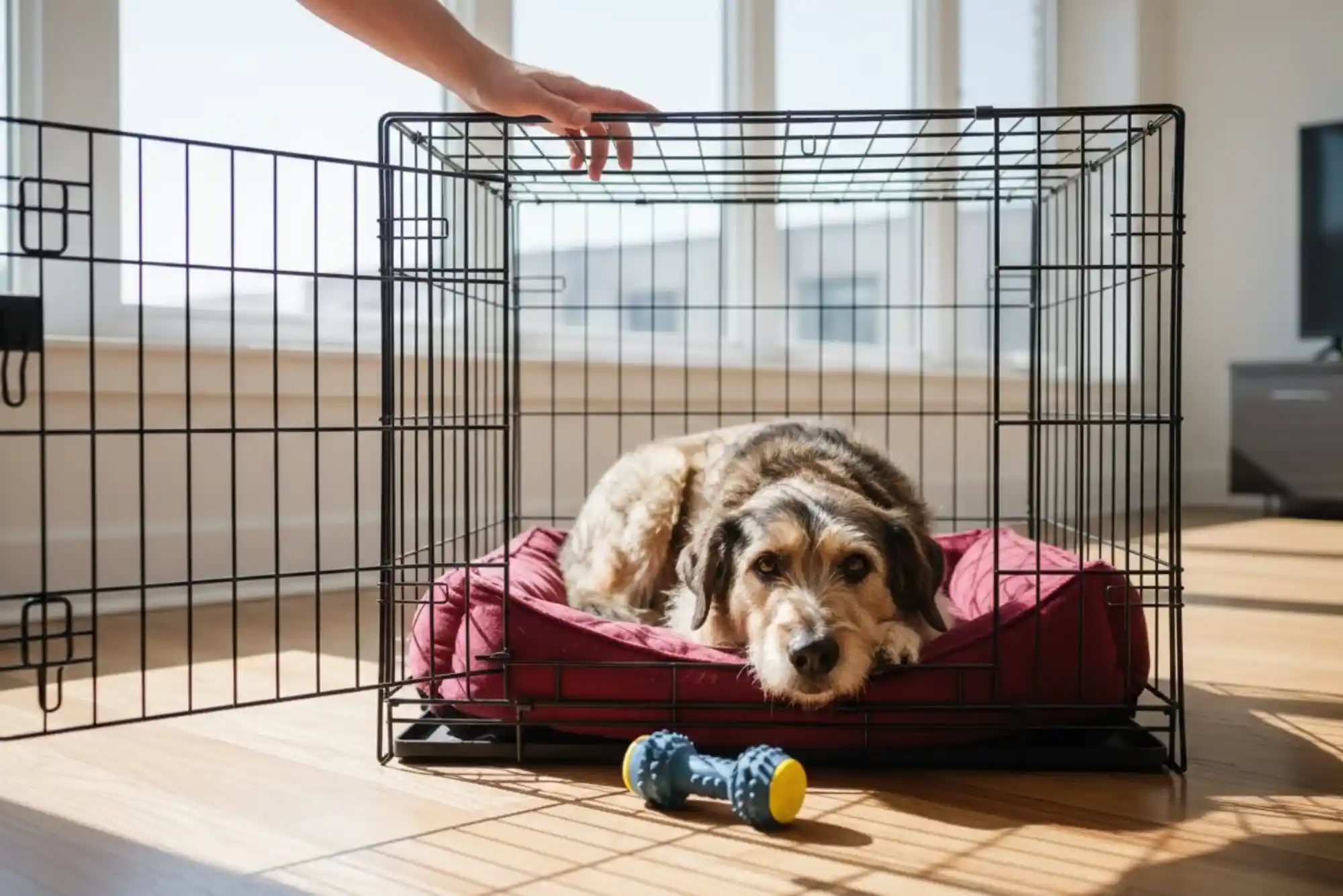
Bringing home a senior or adult rescue dog is a deeply rewarding experience, but it often comes with unique emotional considerations. Many older shelter dogs carry unknown histories, including past trauma, rehoming stress, or isolation distress. When you introduce a traditional crate, a dog dealing with anxiety may view it not as a safe sanctuary, but as a stressful trap. Learning how to crate train an older rescue dog with separation fears and phobias requires a compassionate, slow-paced approach tailored to their emotional needs rather than rigid speed.
Traditional crate training methods designed for young puppies often fail when applied to adult dogs with established fears. Puppies are generally blank slates, whereas older rescue dogs may associate confinement with past abandonment or veterinary stays. To succeed, you must fundamentally change your dog’s mental association with the space. This guide walks you through realistic expectations, step-by-step counter-conditioning, safety protocols, and long-term management strategies grounded in modern positive-reinforcement behavior science.
Understanding Separation Anxiety and Phobias in Senior Rescue Dogs
Before attempting any training, it is essential to distinguish between simple lack of training and genuine emotional panic. An untrained dog might whine for a few minutes out of minor frustration before settling down to chew a toy. An anxious dog, however, experiences a severe distress response driven by cortisol and adrenaline.
Identifying Severe Distress Signals
Recognizing panic symptoms early prevents you from moving too fast and accidentally traumatic conditioning. Look out for the following signs when your rescue dog approaches or enters the enclosure:
Heavy panting, excessive hypersalivation, or foaming at the mouth.
Persistent, high-pitched whining, howling, or barking that does not taper off.
Digging at the floor tray, biting the wire bars, or frantically clawing to break free.
Spontaneous urination or defecation inside the space despite being house-trained.
Dilated pupils, trembling, or hyperventilating before you even close the door.


If your dog displays these panic responses, forcing them into the enclosure will exacerbate their phobia and can lead to broken teeth, torn claws, or severe psychological regression.
Why Traditional Methods Fail Older Rescue Dogs
Standard advice often suggests letting a dog cry it out inside a closed door. For an older rescue suffering from genuine separation phobia, this method is damaging. Letting an anxious adult panic floods their system with stress hormones, reinforcing the terrifying belief that the crate is a dangerous trap.
Older dogs also carry physical conditions like arthritis, hip dysplasia, or stiff joints that make certain flooring or cramped quarters physically painful. Understanding that panic is an involuntary emotional reaction—not deliberate disobedience—is the foundation of successful rehabilitation.
Preparing the Right Environment and Equipment
Setting up for success begins long before you ask your dog to step inside. The physical environment plays a major role in lowering baseline stress levels.
Choosing the Right Type of Enclosure
Standard wire crates work for many dogs, but anxious rescue dogs often perform better with alternative options.
Plastic flight crates offer a den-like, enclosed feeling that lowers visual stimulation from the room.
Heavy-duty impact crates are necessary for dogs with severe escape tendencies who might bend wire mesh.
Alternatively, soft fabric pens or gated safe zones using modular baby gates can work as an effective stepping stone if your dog has an absolute phobia of metal frames.
Ensure the physical size allows your senior dog to stand up fully, turn around comfortably, and stretch out their limbs without hitting the sides.
Creating a Safe Sanctuary Atmosphere
Position the setup in a quiet yet social area of your home, such as a corner of the living room or your bedroom. Avoid isolated basements, cold garages, or high-traffic entryways.
Add orthopedic foam beds to cushion aging joints. Cover three sides of a wire frame with a breathable blanket to create a cozy, den-like security.
You can also incorporate calming aids like synthetic dog-appeasing pheromone diffusers, soft classical music, or white noise machines to muffle unsettling outside sounds that trigger alertness.
Step-by-Step Guide to Crate Train an Older Rescue Dog with Phobias
Rehabilitating an adult dog with phobias requires breaking down the process into micro-steps. Move to the next step only when your dog displays calm, loose body language at the current stage.
Step 1: Desensitizing the Presence of the Structure
Start by leaving the door securely secured wide open or removing the top half completely if using a plastic shell. Never force, push, or lure your dog physically inside.
Begin tossing high-value treats—such as freeze-dried liver, boiled chicken, or cheese—near the entrance. Allow your dog to walk over, eat the treat, and walk away freely.
Over several days, drop treats just inside the doorway, then gradually further back. The goal is to teach your dog that approaching the structure yields fantastic rewards without any loss of freedom.
Step 2: Building Positive Value Inside
Once your dog willingly steps inside with all four paws to grab treats, start feeding their regular meals directly inside with the door wide open.
Prepare long-lasting enrichment toys, such as rubber Kongs stuffed with peanut butter or wet food and then frozen. Place the frozen chew inside.
Allow your dog to enter, chew for as long as they like, and leave whenever they choose. If they prefer to pull the toy outside, secure the toy to the back of the frame so they must remain inside to enjoy it, leaving the exit fully accessible.
Step 3: Introducing Short Door Movement
Once your dog happily spends time enjoying treats inside, you can begin introducing door movement. Gently swing the door halfway shut and immediately open it, feeding a high-value treat through the frame.
Gradually progress to touching the latch without locking it, then closing the door for one second before opening it and rewarding.
If your dog stops eating, stiffens, or looks anxiously at the door, you have moved too fast. Lower the difficulty back to a stage where your dog remains relaxed.
Step 4: Building Duration and Distance Slowly
When your dog remains completely calm with the door closed for thirty seconds while you sit next to them, begin building duration in tiny increments.
Increase duration from one minute to two minutes, then five minutes, always providing a frozen distraction. Next, introduce physical distance by taking two steps back, returning, and rewarding.
Slowly build up to walking out of the room for brief moments before returning calmly. Keep departures and returns low-key—avoid overly emotional greetings that elevate your dog’s arousal levels.
Managing Separation Fears and Daily Routines
Training sessions only account for a small fraction of your dog’s day. How you manage real-life departures determines your overall success.
Desensitizing Departure Triggers
Dogs with separation anxiety are expert observers. They learn to associate departure cues—picking up car keys, putting on shoes, grabbing a coat—with the impending panic of being left alone.
Break these associations by performing your departure routines without actually leaving. Pick up your keys and sit on the couch. Put on your winter coat and make a cup of tea. Walk to the door, touch the handle, and sit back down. When these triggers no longer predict your absence, your dog’s overall anxiety will drop significantly.
Managing Real Departures During Training
While you are actively building positive associations, avoid leaving your dog crated alone for long periods that induce panic. Experiencing a full-blown panic attack can undo weeks of training progress.
If you must go to work or run errands, consider alternative management options in the short term:
Arrange for a dog sitter or trusted family member to stay with your dog.
Utilize a reputable doggy daycare if your dog enjoys the company of other animals.
Set up an open exercise pen or dog-proofed small room with baby gates instead of a fully enclosed crate.
Coordinate remote work or flexible scheduling while working through initial training stages.
When to Seek Professional Help
Crate training an older rescue dog with deep-seated phobias takes time, patience, and consistency. However, severe separation distress sometimes requires professional guidance.
Working with Certified Professionals
If your dog causes self-injury, attempts self-harm by biting wire frames, or shows no progress after several weeks of low-stress training, consult a qualified professional. Look for a Certified Applied Animal Behaviorist (CAAB) or a certified separation anxiety trainer (CSAT).
These experts can analyze subtle body language cues, design individualized systematic desensitization plans, and help you avoid common training pitfalls.
Exploring Veterinary Support
For severe phobias, behavior modification alone can take a long time because the dog’s brain is too flooded with fear to learn effectively. Speak with your veterinarian or a Board-Certified Veterinary Behaviorist about short-term or long-term anti-anxiety medications.
Pharmaceutical support does not sedate or change your dog’s personality; instead, it lowers baseline anxiety levels so your dog can process training and form new, positive associations.
FAQs
How long does it take to crate train an older rescue dog with separation anxiety?
The timeline varies significantly depending on the severity of the dog’s prior trauma and anxiety. Some older rescue dogs adjust within three to four weeks, while dogs with severe separation phobias may require several months of consistent, incremental desensitization. Progressing at your dog’s comfort pace ensures lasting success.
Should I let my anxious rescue dog cry it out in the crate?
No, you should never let a dog with separation anxiety or phobias cry it out. Distress crying indicates genuine panic and elevated stress levels. Allowing them to panic reinforces fear, increases isolation distress, and can lead to severe behavioral regression or physical self-injury.
What can I use instead of a crate if my rescue dog panics inside?
If your dog has an intense phobia of traditional metal crates, you can use a modular exercise pen, a soft-sided pop-up playpen, or a dog-proofed room partitioned with sturdy baby gates. These alternatives offer safe boundaries while reducing feelings of claustrophobic confinement.
Can an older rescue dog ever fully overcome separation phobias?
Yes, many older rescue dogs make dramatic progress and learn to view their designated safe space as a comforting sanctuary. With patient counter-conditioning, consistent daily routines, proper mental exercise, and professional guidance when needed, adult dogs can overcome deep-rooted phobias and enjoy feeling secure.
Learning how to crate train an older rescue dog with separation fears and phobias is ultimately an exercise in building trust. By shifting your mindset from fast compliance to patient emotional rehabilitation, you allow your rescue companion to feel safe at their own pace. Respect their limits, reward every small victory, and rely on gentle desensitization methods. With time and consistency, that once-intimidating enclosure can transform into a peaceful refuge where your senior rescue dog feels entirely secure.