Introduction
Puppy teething can be one of the most challenging stages of raising a young dog. Puppies explore their surroundings with their mouths, while growing teeth can make their gums uncomfortable. As a result, biting hands, chewing furniture, and grabbing household objects can become daily habits. Understanding the Puppy Teething Timeline: What Week Do Puppies Stop Biting and Chewing Furniture? can help owners respond with patience and consistency.
Most puppies begin losing their baby teeth at around 12 to 16 weeks of age. Their permanent teeth gradually replace those small teeth over the following months. By approximately six months, most puppies have their adult teeth. However, teething does not automatically make every chewing or biting behavior disappear.
The important distinction is between teething-related chewing and normal puppy behavior. A puppy may continue chewing after teething because chewing is enjoyable, stimulating, and natural. Therefore, training should happen alongside the physical changes taking place in your puppy’s mouth.
Puppy Teething Timeline: What Week Do Puppies Stop Biting and Chewing Furniture?
The puppy teething timeline usually starts during the first few weeks of life. Puppies are born without visible teeth, which allows them to nurse safely. Their baby teeth begin appearing during the early weeks.
By around eight weeks, puppies generally have a full set of sharp baby teeth. These teeth help puppies transition toward solid food. They also encourage puppies to investigate objects through mouthing and chewing.


Around 12 to 16 weeks, the teething process becomes more noticeable. Baby teeth start falling out, while permanent teeth begin emerging. This stage can cause increased chewing because puppies often seek pressure against their gums.
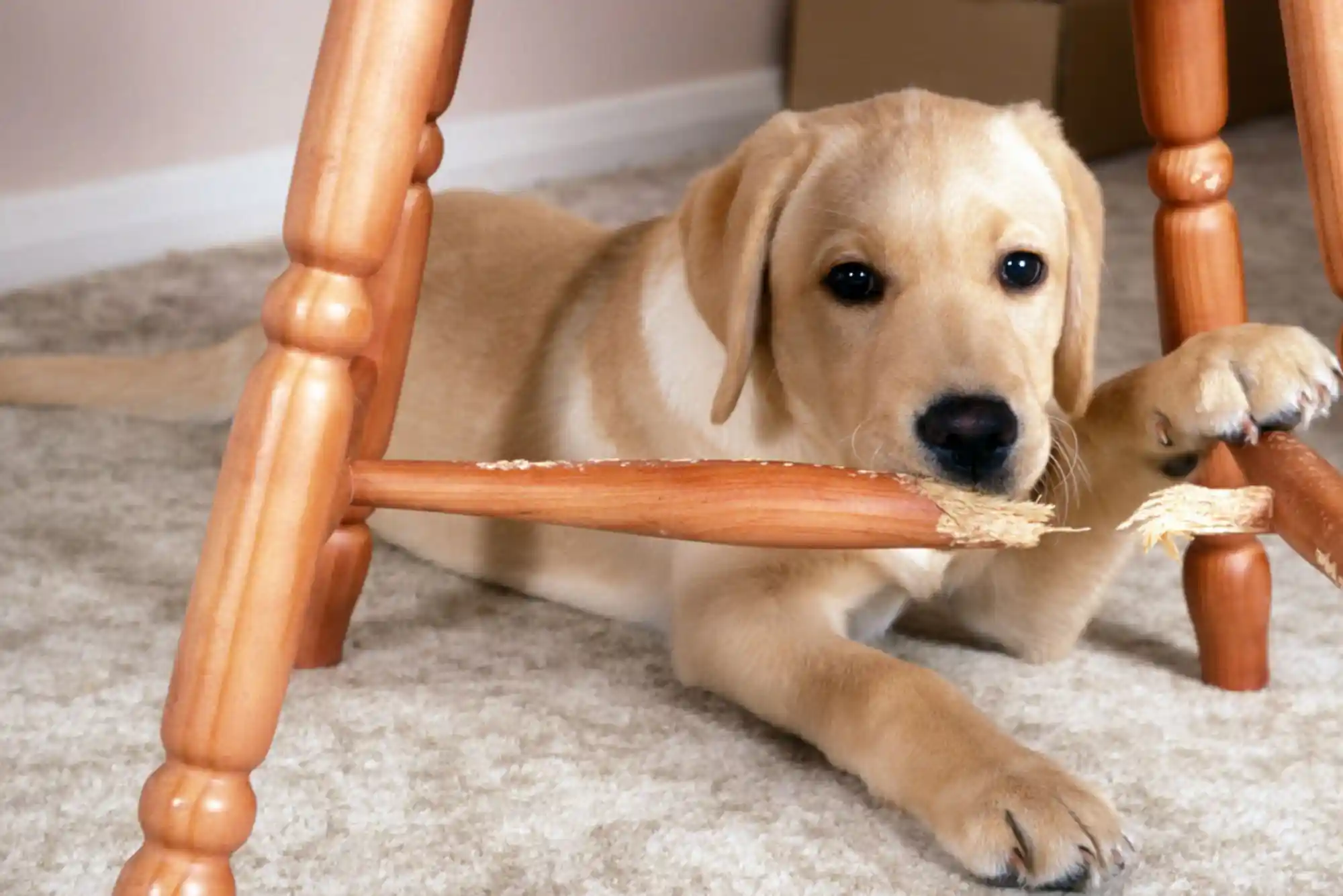
Between four and six months, many puppies chew more intensely. Furniture legs, shoes, rugs, cushions, and other objects may become tempting targets. Although the behavior can be frustrating, appropriate management can make this stage easier.
By around six months, most puppies have their permanent teeth. This is an important milestone in the Puppy Teething Timeline: What Week Do Puppies Stop Biting and Chewing Furniture? Yet some puppies continue chewing furniture beyond this age.
That does not necessarily mean something is wrong. Instead, the puppy may have learned that furniture provides an interesting texture or rewarding sensation. Consistent training is therefore essential.
When Do Puppies Stop Biting?
Many owners wonder exactly when puppy biting will stop. There is no single week when every puppy suddenly stops biting. However, biting usually decreases as puppies mature and learn better ways to interact.
Young puppies often bite during play. They may grab hands, sleeves, ankles, or other moving objects. This behavior can partly come from their early social development.
Puppies also learn bite inhibition through interactions with their mother and littermates. If a puppy bites another puppy too hard, the other puppy may stop playing. Over time, this teaches the puppy that excessive biting ends the interaction.
After bringing a puppy home, owners should continue teaching appropriate mouth behavior. Calmly redirecting biting toward a suitable toy can be more effective than punishment.
A puppy that receives consistent feedback can gradually understand which behaviors are acceptable. With maturity and training, many puppies show significant improvement between six and twelve months.
Why Do Puppies Chew Furniture?
Furniture chewing is not always caused by teething. Teething is an important factor, but puppies also chew because they are curious and energetic.
Chewing provides sensory stimulation. It can also help an active puppy occupy itself when there is little else to do. Therefore, boredom can quickly turn into destructive chewing.
Separation or frustration can also contribute to unwanted chewing. A puppy left alone without suitable activities may search for something interesting to investigate.
Environmental management is therefore an important part of puppy training. Owners should reduce access to furniture and other valuable objects while teaching alternative behaviors.
Providing an appropriate lifestyle also matters. Puppies need age-appropriate exercise, mental stimulation, rest, socialization, and training. When these needs are balanced, destructive behaviors can become easier to manage.
How to Stop a Puppy Chewing Furniture
Stopping furniture chewing starts with preventing the behavior from becoming rewarding. If a puppy repeatedly chews a chair leg, the habit can become established.
When possible, block access to tempting furniture. Puppy-proofing the home gives your dog fewer opportunities to practice unwanted behavior.
Next, provide safe alternatives. A puppy should have suitable toys and chews that match its size and chewing style. Rotating toys can also maintain interest.
When your puppy chooses an appropriate chew, calmly praise the behavior. This helps create a positive association with suitable objects.
If your puppy approaches furniture, redirect attention before chewing begins. Offer a suitable toy and reward the puppy for engaging with it.
Consistency matters more than intensity. Shouting after a puppy has already destroyed something rarely teaches the desired alternative. Immediate, calm redirection is generally more useful.
For owners interested in creating a comfortable and thoughtfully equipped environment for their pets, Premium Pet Living can provide inspiration for making everyday pet care more comfortable and organized.
Managing Puppy Biting During Play
Play biting can be particularly difficult because puppies become excited quickly. A puppy may start gently mouthing before suddenly becoming much more intense.
When biting becomes too hard, stop the game briefly. Removing attention teaches the puppy that excessive biting makes play disappear.
Avoid encouraging hand wrestling. Although this may seem harmless when a puppy is tiny, it can teach the puppy that human hands are appropriate chew toys.
Instead, use toys during interactive games. Tug toys, appropriate chew toys, and other puppy-safe objects can create distance between your hands and the puppy’s mouth.
Reward calm behavior as well. Puppies need to learn that quiet interactions are rewarding too.
Over time, these repeated experiences can improve impulse control. The goal is not simply to stop every mouth movement. The goal is to teach the puppy how to use its mouth appropriately.
Puppy Teething Timeline and Development
The Puppy Teething Timeline: What Week Do Puppies Stop Biting and Chewing Furniture? is closely connected with overall puppy development. Physical growth, learning, socialization, and behavior all happen rapidly during the first year.
Understanding developmental milestones can help owners recognize what their puppy may be experiencing at different ages. The American Kennel Club provides information about puppy growth and development through its AKC Puppy Developmental Milestones resources.
Although every puppy develops at its own pace, developmental guidance can provide useful context. A puppy that is still chewing at five months may simply be going through a normal developmental stage.
At the same time, persistent destructive chewing deserves attention. Owners should consider whether the puppy has enough suitable outlets, sufficient rest, appropriate supervision, and consistent training.
How to Make the Teething Stage Easier
A predictable routine can make puppy life easier. Regular feeding, sleeping, training, play, and toilet breaks help puppies understand what happens throughout the day.
Rest is especially important. Overtired puppies can become unusually mouthy and difficult to manage. Giving a puppy a quiet place to sleep can therefore reduce some unwanted behavior.
Safe chewing opportunities are equally important. Puppies should have appropriate objects available when they feel the urge to chew.
Supervision is also valuable during the most active teething months. When you cannot supervise your puppy, use an appropriate puppy-proofed area rather than allowing unrestricted access to the home.
Training should remain positive and consistent. Rewarding desirable choices helps puppies understand what owners want them to do.
For broader pet-related content, care ideas, and online resources, Crownweb offers a useful destination for discovering additional information and services.
What Week Do Puppies Usually Stop Chewing?
There is no exact week when puppies universally stop chewing. Most intense teething-related chewing tends to decrease once adult teeth have emerged, usually around six months.
However, chewing can continue afterward. Dogs naturally use chewing as an enriching activity throughout their lives.
The key goal is therefore not to eliminate chewing completely. Instead, owners should teach puppies where chewing is appropriate.
A six-month-old puppy that occasionally chews an approved toy is behaving normally. A puppy that regularly destroys furniture may need additional management and behavioral guidance.
If destructive chewing remains severe despite consistent training, consider speaking with a qualified veterinary professional or reward-based dog trainer. They can help identify possible behavioral triggers and create an appropriate plan.
Puppy Teething Timeline: What Week Do Puppies Stop Biting and Chewing Furniture? Explained
The Puppy Teething Timeline: What Week Do Puppies Stop Biting and Chewing Furniture? generally points toward the six-month stage as a major milestone. Most puppies have their adult teeth by this age, and teething discomfort begins to decline.
However, there is no guaranteed stopping point. Some puppies continue biting or chewing because these behaviors have become habits.
Training should therefore begin well before teething ends. Owners can teach bite inhibition, redirect chewing, reward calm behavior, and manage access to furniture throughout the process.
With time, consistency, and appropriate outlets, most puppies become much easier to manage. The first months can feel demanding, but they are also an important opportunity to establish lifelong habits.
Frequently Asked Questions
At what age do puppies stop biting?
Many puppies begin showing noticeable improvement as they mature, particularly after the teething period. However, biting can continue for several months if it has become part of play or attention-seeking behavior. Consistent training and redirection can help accelerate improvement.
What age do puppies stop chewing everything?
Chewing often becomes less intense after permanent teeth have developed, usually around six months. However, dogs can continue chewing throughout adulthood. Teaching appropriate chewing habits is therefore more effective than expecting chewing to disappear completely.
Do puppies calm down after teething?
Teething can contribute to mouthiness and restlessness, so some puppies become easier to manage afterward. However, energy levels and behavior also depend on breed, age, training, exercise, environment, and individual temperament.
How do I stop my puppy from biting my hands and feet?
Redirect your puppy toward an appropriate toy whenever biting begins. If biting becomes excessive during play, briefly end the interaction. Avoid turning hands or feet into play objects, and consistently reward gentle behavior.
How do I stop my puppy from chewing furniture?
Limit access to furniture while supervising your puppy. Provide appropriate chew toys and redirect your puppy whenever it targets household objects. Rewarding the correct choice helps establish a lasting habit.
Conclusion
Understanding the Puppy Teething Timeline: What Week Do Puppies Stop Biting and Chewing Furniture? makes this challenging stage much easier to navigate. Most puppies finish getting their permanent teeth at around six months, but biting and chewing may continue because of learned habits, curiosity, boredom, or normal canine behavior.
Related Reading: Aluminium Garden Furniture Sale in the UK Featuring Metal Options
Related Reading: The New Sparkle of Commitment: Lab Diamond Wedding Band and Man Made Diamonds
Related Reading: How to Book a Car in Cyprus with Less Stress
Related Reading: What Is Pulse Induction Technology in Metal Detectors?
Related Reading: How to Fly Internationally with a Dog: Cabin Dimensions, Pet Passports, and IATA Rules
Related Reading: دكتور أنف وأذن وحنجرة – التشخيص والعلاج الشامل لمشاكل الأنف والأذن والحنجرة — full guide
Related Reading: How to Stop a Dog from Barking at Other Dogs on Leash: Reactivity Protocol